

ZINC - Forms, Uses & Resources
Feb 25, 2026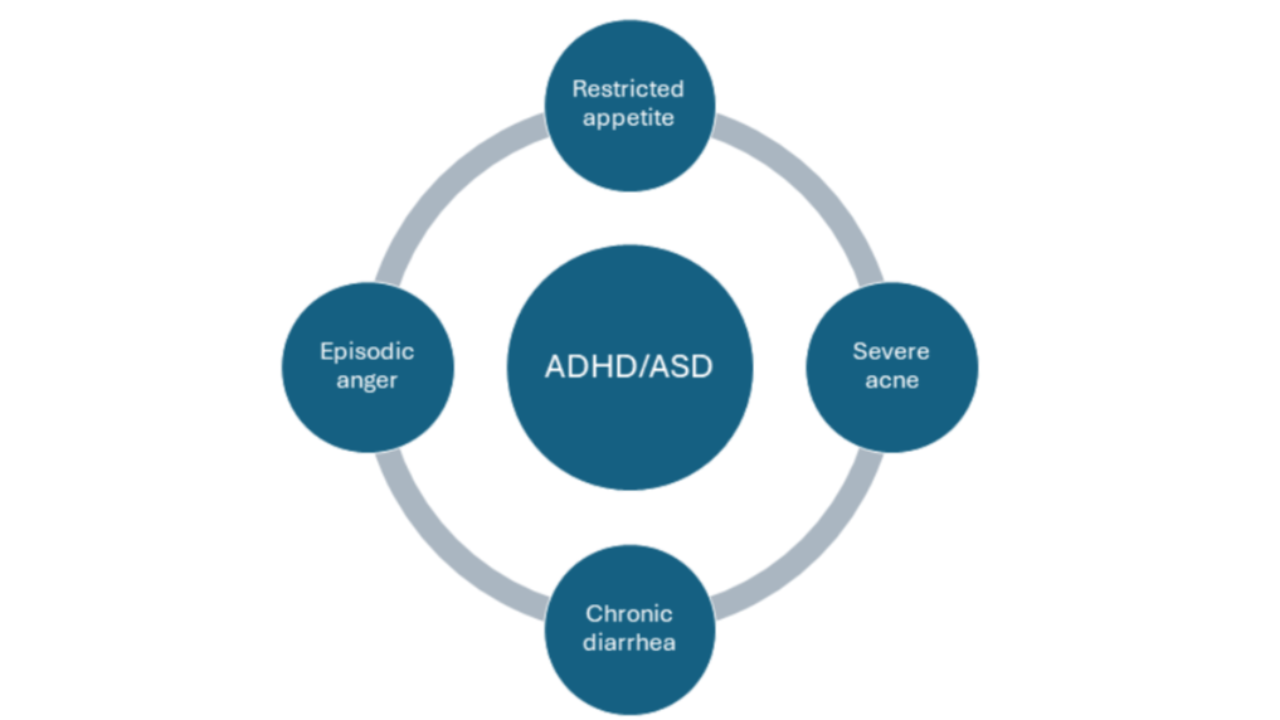
Zinc (Zn) is an essential mineral vital for over 200 enzymatic pathways including immune function, cell growth, wound healing, DNA synthesis, and senses of taste/smell.
Research has shown that ZINC is:
- Often low in ADHD - Zinc deficiency may affect cognitive development by alterations in attention, activity, neuropsychological behavior and motor development.
- May be related to low free FA levels Low zinc may predict poor response to amphetamines & stimulant medications
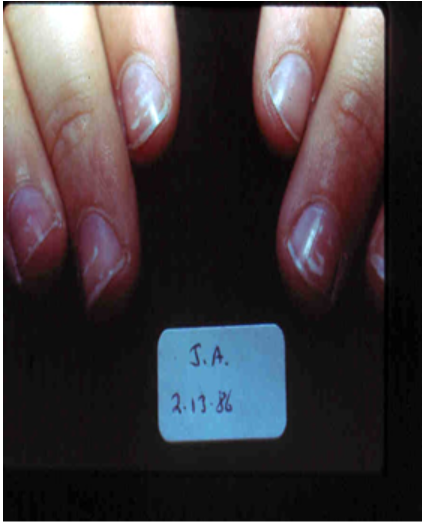
- Zinc deficiency is associated with acne, mouth sores, hair loss, nail spots/lines, pica, loss of smell, taste
- Studies in animals show that zinc deficiency during the time of rapid brain growth, or during the juvenile and adolescent period affects cognitive development by decreasing activity, increasing emotional behavior, impairing memory and the capacity to learn.
- Low maternal intakes of zinc during pregnancy and lactation were found to be associated with less focused attention in neonates and decreased motor functions at 6 months of age.
- Zinc supplementation resulted in better motor development and more playfulness in low birth weight infants and increased vigorous and functional activity in infants and toddlers.
What competes with ZINC:
- Phytates and oxalates from foods
- Caffeine and tannins from tea and coffee
- Oral contraceptives
- Analgesic drugs such as aspirin and salicylates
- Prolonged periods of diarrhea
- High fiber diet (binds to zinc in the gut)
- Alcohol (reduces absorption and increases excretion of zinc)
Treating Zinc deficiency (as found in at least 60% of our patients)
- Add Molybdenum and provide adequate amounts of vitamin B6/Magnesium
- Optimize Vitamin C dose
Avoid Sources of Copper including:
- Tap water (Cu pipes)
- Swimming pools and hot tubs (Cu algaecide)
- Chocolate, Carob, Soy, Shellfish, Liver
- Avoid Red/ Yellow dyes, HFCS, and MSG (deplete Zinc)
Zinc supplementation
- Check plasma or RBC (red blood cell) zinc levels
- If the levels are low, supplement with at least 15 mg of elemental zinc given separately from meals; recheck levels and may need much higher doses
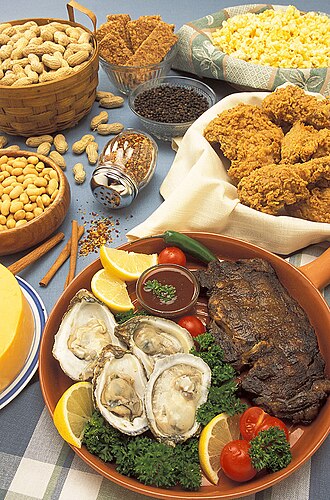
- Good food sources of zinc include red and white meats, oysters, beans, nuts and whole grains.
Forms of ZINC
- The OHMc form of ZINC is chelated with glycine with 2 molecules glycine bonded to one ion of zinc or molybdenum for optimal absorption. Other nutrients included in this product are P5P, riboflavin and taurine for advanced bioavailability. Taurine in conjunction with zinc can aid in optimal neurologic functioning. Molybdenum helps to prevent the excretion of zinc and P5P can help maintain zinc levels.
- Zinc piccolinate is a highly absorbable zinc supplement. The zinc is bound to picolinic acid, which is naturally produced in the body, helps the zinc complex absorb and dissolve better than some other forms, improving zinc uptake
- Zinc acetate is a prescriptive medication (e.g., for Wilson's disease), which binds to copper in the gut, preventing its absorption and helping to lower copper levels in the body. This form of zinc is known for its ability to treat copper overload by reducing absorption, but can cause stomach upset and is best taken with food.
- Zinc carnosine is a chelated compound combining zinc and L-carnosine. It is primarily used to support zinc absorption and for supporting and healing the gastrointestinal (GI) lining, protecting against inflammation, reducing "leaky gut," and promoting tissue repair. It works by delivering zinc directly to the stomach and intestines, offering antioxidant protection and improved absorption of zinc.
Members, mentees and patients, you have the access code and password to order nutraceuticals and herbals from OHMc nutraceuticals.
References (more available in Resource section of Membership Program)
- DiGirolamo AM, Ramirez-Zea M. Role of zinc in maternal and child mental health. Am J Clin Nutr. 2009 Mar;89(3):940S-945S. doi: 10.3945/ajcn.2008.26692C. Epub 2009 Jan 28. PMID: 19176735
- Li Jin et al. Zinc Intakes and Health Outcomes: An Umbrella Review. Frontiers in Nutrition. Volume 9. 2022DOI=10.3389/fnut.2022.798078
- Li, DD, Zhang, W, Wang, ZY, & Zhao, P. (2017). Serum Copper, Zinc, and Iron Levels in Patients with Alzheimer's Disease: A Meta-Analysis of Case-Control Studies. Frontiers in Aging Neuroscience, 9,300. https://doi.org/10.3389/fnagi.2017.00300
- Maares, M, & Haase, H. (2016). Zinc and immunity: An essential interrelation. Archives of Biochemistry and Biophysics. 611, 58–65. https://doi.org/10.1016/j.abb.2016.03.022
- Maywald, M., & Rink, L. (2022). Zinc in Human Health and Infectious Diseases. Biomolecules, 12(12),1748. https://doi.org/10.3390/biom12121748
- Ozgur Yorbik, M. Fatih Ozdag, Abdullah Olgun, M. Guney Senol, Semai Bek, Serif Akman. Potential effects of zinc on information processing in boys with attention deficit hyperactivity disorder. Progress in Neuro-Psychopharmacology and Biological Psychiatry. Volume 32, Issue 3, 2008. Pages 662-667. https://doi.org/10.1016/j.pnpbp.2007.11.009
- Roohani N, Hurrell R, Kelishadi R, Schulin R. Zinc and its importance for human health: An integrative review. J Res Med Sci. 2013 Feb;18(2):144-57. PMID: 23914218
- Stiles, L.I., Ferrao, K. & Mehta, K.J. Role of zinc in health and disease. Clin Exp Med 24, 38 (2024). https://doi.org/10.1007/s10238-024-01302-6
- Toufexis MD, Hommer R, Gerardi DM, et al. Disordered eating and food restrictions in children with PANDAS/PANS. J Child Adolesc Psychopharmacol. 2015;25(1):48-56. doi:10.1089/cap.2014.0063
- Wang, L, & Song, Y. (2018). Efficacy of zinc given as an adjunct to the treatment of severe pneumonia: A meta-analysis of randomized, double-blind and placebo-controlled trials. The Clinical Respiratory Journal, 12(3), 857–864. https://doi.org/10.1111/crj.12646

